

















The Play and Bonding Checklist
Simple things for stimulation, connection and development, in one list you can tick off.
Newborn play is short and simple: a few minutes on a mat, a face to look at, something to grasp. This checklist covers the newborn toys and tummy time gear most families use in the first year. Tick items off as you go and your progress is saved on this device.
Useful from the first few weeks
Floor time
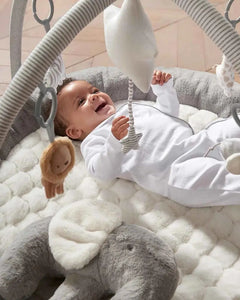
Play gym
A play gym gives your baby something to look at, bat and reach for while lying on their back, and doubles as a spot for tummy time.
Shop play gyms →Play mat
A padded play mat makes a clean, cushioned floor space for rolling, sitting and crawling. Larger mats stay useful well into the toddler years.
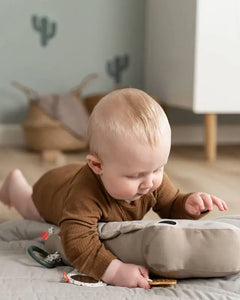
Shop all play mats →Tummy time support
Tummy time builds neck, shoulder and core strength. A small prop or tummy time toy can make it more comfortable. Always supervise, and only while your baby is awake.
Shop tummy time →Bouncer
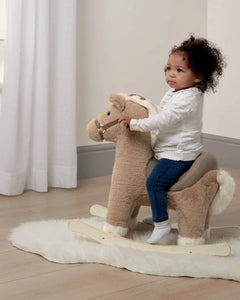
A bouncer gives your baby a different view of the room while you are close by. Bouncers and rockers are for supervised awake time, not for sleep.
Shop bouncers and rockers →First toys
Rattle
A light rattle is often the first toy a baby can hold and shake, which helps them connect movement with sound.
Shop rattles →Teether
A teether gives sore gums something safe to chew. Follow the cleaning instructions and check it regularly for wear.
Shop teethers →Soft toy
A soft toy for cuddles during awake time. Keep soft toys out of the cot while your baby is under 12 months.
Shop soft toys →Activity toys
Activity toys with different textures, sounds and mirrors give your baby new things to explore as they start to grasp and sit.
Shop activity toys →Educational toys
Stackers, sorters and simple puzzles come into their own from around six months, once your baby can sit and use both hands.
Shop educational toys →Play and Bonding Checklist FAQs
What toys does a newborn need?
A newborn needs very few toys. A play gym or play mat, a rattle and one or two high-contrast or textured toys are enough for the first months. Your face and voice are still the most interesting things in the room.
When should I start tummy time?
You can start tummy time from birth, with a minute or two on your chest or on a firm surface, a few times a day. Build up gradually as your baby gets stronger. Tummy time is always supervised and only for when your baby is awake.
Do I need a play gym and a play mat?
You do not need both at the start. A play gym has its own padded base and hanging toys, which suits the first months. A larger play mat becomes more useful once your baby rolls, sits and crawls.
When do babies start using teethers?
Many babies start mouthing and chewing from around three to four months, and first teeth often appear at around six months. A teether can be offered once your baby can hold and bring objects to their mouth.
How long can my baby stay in a bouncer?
Keep bouncer time short and supervised, and follow the time and weight limits in the manufacturer's instructions. Move your baby to a firm, flat sleep surface if they fall asleep.
What are the best tummy time toys?
Good tummy time toys are ones your baby can see without lifting their head far: an unbreakable mirror, a high-contrast card or a soft toy placed just in front of them. Change the toy and its position to encourage your baby to look both ways.
Looking for more options? Explore our wider range of playtime, toys and play mats.
More BLP checklists:
The Nursery Checklist The Feeding Checklist The Bath and Care Checklist The Out and About Checklist The Car Checklist The Family Travel Checklist The Hospital Bag Checklist All checklists